
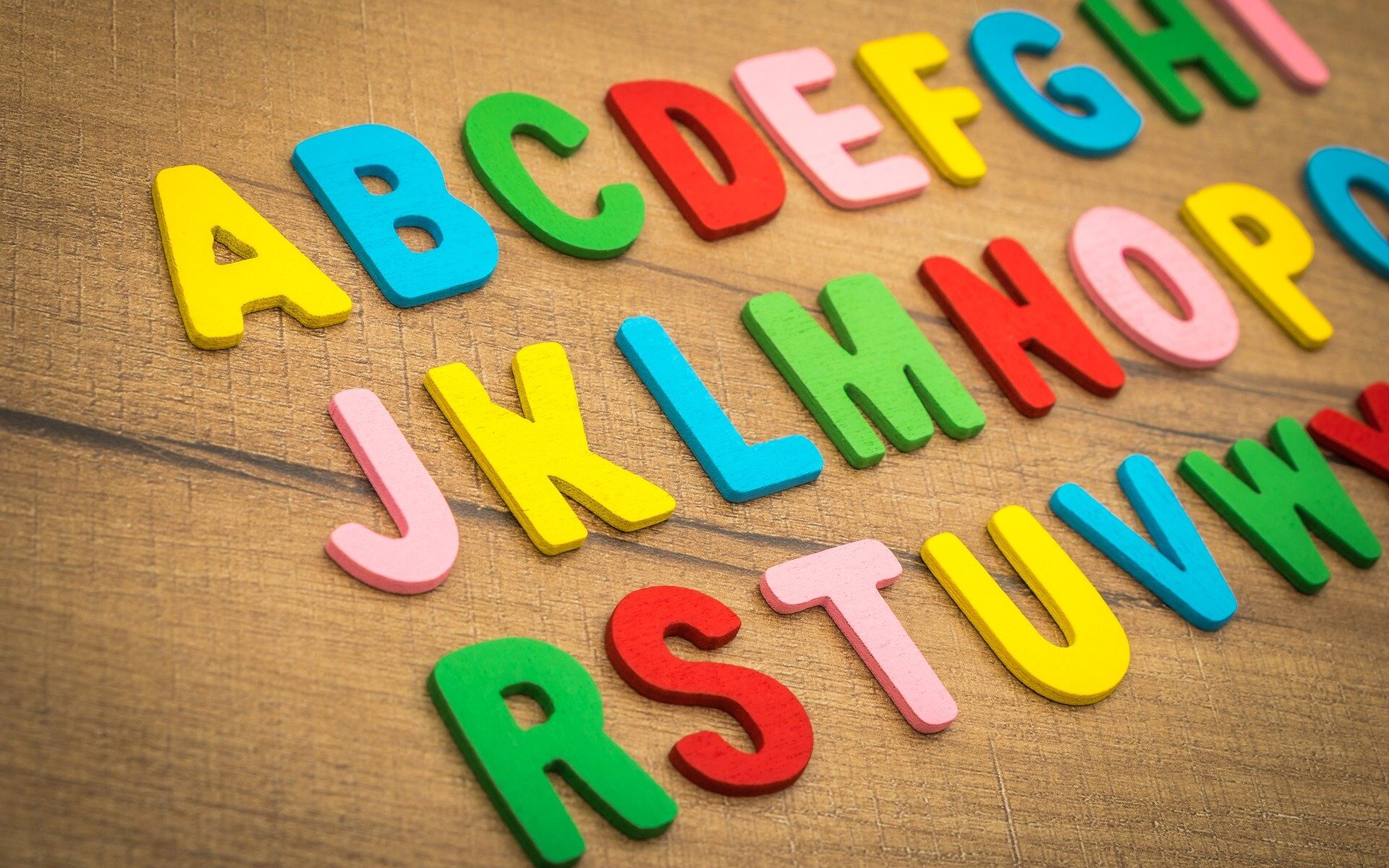
How to Build Your Child’s Vocabulary for PSLE English

Primary English

Vocabulary makes up an important part of the Primary English syllabus. From cloze passages to comprehension passages and essays, students are expected to have built up a sizeable vocabulary by the time they are in Primary Six. An extensive vocabulary not only increases students’ coherence when expressing themselves, but also adds colour and flair to one’s writing. It is never too late for your child to pick up some new words to add to their vocabulary collection – they only have to start now!

Read Widely

Is your child an avid reader, or has it been forever since they picked a book up? One of the most sure-fire ways to improve one’s vocabulary is to read widely. Don’t just stick to one or two genres, either – be sure to choose a variety of works, including fiction and non-fiction, factual articles and narratives, newspapers and books, and even prose and poetry. It is also a good idea to read from a variety of contexts and authors. Different writers have a different arsenal of vocabulary, and different words are used in varying contexts. For example, some words and phrases are more archaic and usually only used in older contexts, while others are more colloquial and spoken more often by modern youngsters. Knowing this can equip your child with the vocabulary needed to write in different styles. By exposing your child to a good selection of works, they can learn numerous sets of vocabulary to be used in any situation.

Keep a Vocabulary Journal

Coming across new vocabulary is one thing, but these words can easily be forgotten especially if the mind simply glosses over them because they are unfamiliar. If one does not keep a record of the words they have not yet learned, these words may be lost as time goes by.

For maximum learning, have your child keep a notebook and a dictionary close by while they read. Whenever they come across a word or phrase that they do not understand, have them look it up in the dictionary, and then write the word and its definition in the notebook. In this way, your child gets to practice writing the word immediately, and also have a handy compilation of all the new words they have learned. As such, it is easy to refer back to their word list and look through their stash of new vocabulary as and when it is needed.

Practice Using New Words

As the old adage goes, practice makes perfect. One can memorise an entire dictionary, but it will do no good if they do not know how to use the vocabulary they have learned. Additionally, PSLE English consists of closed-book papers, so students are not allowed to look up the usage of any words. To be able to effectively use new vocabulary, one has to practice using it in their everyday life and get comfortable with it. If they are not already doing it, encourage your child to cultivate the habit of writing daily. They do not have to be writing tons of essays – even keeping a simple diary or journal about their daily life can help to reinforce their writing ability and vocabulary usage. You can also get your child to use new words in their everyday speech. Not only does this help them to learn the contexts in which to use the vocabulary they have learned, but it also boosts their oral skills and fluency.

Learn a New Word Every Day

Cramming a whole dictionary’s worth of vocabulary overnight is not going to leave your child remembering much. It is much easier to remember words by taking them one step at a time, or in our context, one word a day. Many online dictionaries have a “word of the day” where they introduce a less-known word, its definition, and its usage. This can be a great place to start if you are not sure where to begin. Alternatively, you could pick out a few more challenging words for your child, and teach them one new word each day. Be sure to incorporate the word into your everyday life so that your child will know how to use it by heart.

Learn Frequently Used Words First

On top of learning vocabulary from various contexts, many educators maintain that language is best learned the more frequently it is used. This means that instead of going for some obscure, archaic vocabulary used only in a different neck of the woods, it is easier and more beneficial to learn words that are frequently used in one’s everyday life. For example, a foreigner can pick up Singlish phrases much easier when they hear them in the marketplace and hawker centres every day, as compared to studying a list of dialect words that are almost never used locally. The same goes for new vocabulary. Just by learning the most common words used in our daily context, students will gain an extensive enough vocabulary to express themselves with ease!

What Any Parent Needs to Know About the Gifted Education Program (GEP)

Gifted Education Program

If you have a child enrolled in primary school, chances are you will have heard of the Gifted Education Program – a fabled opportunity for your child to advance to greater heights. Perhaps you are the proud parent of a student who has already been selected for this program, or maybe you are simply looking to find out more about this program. Before diving in headfirst and making a decision, here is everything you should know about the Gifted Education Program.

What are the Screening and Selection Tests?

The first test in August is a screening exercise meant to extract potential candidates for the GEP. In this screening test, students will take two papers to assess their intellectual aptitude, one in English and the other in Mathematics. Those who do well on this screening test will then move on to the selection test that takes place in October. The selection test includes the third paper alongside English and Mathematics – General Ability. The top percentage of students in this selection test will then be officially invited to enroll in the GEP in the next academic year.

How did the GEP Come About?

First introduced in 1984, the GEP was conceived as an enrichment program catering to a widening mix of learning aptitudes. It was originally meant for both primary and secondary school students, with screening tests being conducted in Primary 3 and Primary 6. However, the GEP in secondary schools saw a decline in enrolment when the Integrated Program (IP) was introduced in 2004. As such, the GEP was discontinued for secondary schools and is only available for Primary 4 to 6 students today.

To prepare for the rigorous curriculum, a selected few primary and secondary school teachers were tasked to undergo special training to teach GEP-qualified students. The first batch of 40,000 Primary 3 students sat for their screening tests in September 1983, of which only the top 100 were chosen to be the pioneers of the primary school GEP beginning in January 1984. The two schools selected to pilot this program were Rosyth School and Raffles Girls’ Primary School.

For the secondary school program, candidates were chosen based on their PSLE grades – they had to have scored a minimum of three A-stars to be invited to sit for the screening tests. Again, just the top 100 students in the screening tests were offered a place in the GEP for secondary school, commencing their classes in January 1984 at Raffles Institution and Raffles Girls’ Secondary School.

Should I Train My Child For GEP?

It is important to consider that the GEP is not for everyone. Since the screening and selection tests are meant to assess a child’s natural ability, the Ministry of Education has recommended against enrolling your child in a preparation course to pass the GEP placement tests. Some students may need a small boost to unlock their intellectual gifts, but it is advisable to keep in mind that the GEP regimen is mentally taxing and can be stressful to students who qualified for GEP with training instead of natural potential. While GEP can be a prestigious status, it is still a small part of a child’s journey. Rest assured that every child has a different path to success and will flourish in their own time.

What are the Different Coding Languages Your Child Can Learn?

coding classes in Singapore

As the trend of coding classes in Singapore rises, you may be thinking of signing your child up for some as well. Before deciding which class to send your child to, it is important to consider the different coding languages your child can learn. Depending on the coding language they are practicing, your child can learn to make different types of software for different platforms, such as mobile applications, websites, or even artificial intelligence systems. This is a great accomplishment to put on your child’s portfolio and can broaden their career prospects depending on the language they learn. Additionally, some coding languages are easier to learn than others. Choosing the right coding language for your child can make a difference in whether they grow to love coding or end up dreading it.

Although programming languages are often simply grouped under the umbrella of coding, there are actually hundreds of different languages one can learn. Coding languages are just like natural human languages in that each one is used to communicate with a different type of computer system. To be able to code a program that can run on a certain system, you will have to learn the same language that that computer understands.

Coding languages vary widely in difficulty level. For beginners, especially young children, it is good to start with a simpler coding language to get a grasp on the concept before moving on to more complicated languages. As such, these are the common programming languages widely taught in coding schools in Singapore, which are easy for children to pick up and understand.

Scratch

Scratch is an educational tool meant to teach kids – or anyone! – to code. Developed by Mitch Resnick and patented by the Massachusetts Institute of Technology (MIT), it features an intuitive visual interface with drag-and-drop functionality. Kids can drag their desired command to the editor and see its effect on animating a friendly cartoon sprite. The editor allows them to chain commands together, essentially programming an animation in its most basic form. As they progress to more advanced levels, kids can even start programming simple games! Scratch is free and has a large online community of educators and learners.

Blockly

Created by Google, Blockly is another visual programming tool similar to Scratch. As its name suggests, kids can drag and drop blocks into an editor, linking them together to form a sequence of commands. Instead of visualising the effects on a cartoon sprite, however, Blockly will translate these visual blocks into actual code for the popular programming languages of JavaScript, Python, PHP, Lua and Dart. This makes Blockly a great transitioning tool for kids to progress from visual block commands to text-based programming languages. Additionally, the clean design of Blockly, as compared to Scratch’s more cartoonish appearance, may be more appealing to older children.

Python

The perfect graduation language from block-based coding tools, Python is often the first text-based programming language that new coders are introduced to because it is easy to pick up. It is also extremely versatile and can be used to program practically anything – well-known platforms made using Python include Google, Spotify and Instagram. Python has plenty of libraries for data science and artificial intelligence, another growing trend in today’s technological world. If your child is interested in these areas, exploring Python may be a good start to help them learn more about data analysis – an invaluable skill in the technological field.

JavaScript

JavaScript is a popular language for web development. Like Python, it is a great beginner language for coders who are just starting out. JavaScript focuses more on front-end website development, and also features a wide variety of libraries to create just about anything on a webpage. JavaScript is used on almost every website out there. It is an important language to know if your child has any interest in making websites. Despite its wide use in websites, JavaScript can also be used to code games and work with other applications. The great thing about JavaScript is that you do not need to install anything to code with it. Simply open any text editor and start coding!

Lua

Another beginner-friendly language, Lua (pronounced Loo-ah) is often used to create plugins and modifications for games because it is easy to integrate into other applications. Well-known applications that use Lua include Adobe Photoshop, World of Warcraft, and Angry Birds. Lua has a growing online community with an increasing interest in the language. If your child is interested in creating scripts for games, Lua is a great option to look into. Roblox, a game platform popular with kids, also uses a modified version of Lua to create scripts. As such, kids will be able to create their own games on Roblox by learning to code in Lua.

How to Maximise the Benefits of Home-Based Learning for JC Students

JC Maths

In light of the pandemic, schools have shifted their lessons to home-based learning for a period of time. After the resumption of face-to-face classes, some classes remain hybrid, where lessons are delivered both in-person and online. If anything, home-based learning has disrupted our education system and is here to stay. How can a JC student get used to this new normal without compromising their learning?

Find a Conducive Environment

At the heart of learning is a good study environment – one must find a quiet place where they can fully concentrate on the lesson. This means moving yourself away from all possible distractions, including other people if necessary. Lounging on your bed in pyjamas while attending an online lecture might sound tempting, but is also the perfect set-up for complacency and tardiness. Remind yourself that each online class you attend is meant to be like a face-to-face lesson, so discipline is paramount even if your teachers and classmates cannot see you. Treat each class as if it is a normal school day, participating wherever possible to involve yourself in the lesson.

It is also important to ensure that your online lesson can carry on without any interruptions. This includes having a stable internet connection, as well as quality audio and video. You probably would not get the full benefit of a face-to-face class while sitting too far back to see the board, nor would you enjoy the lesson if you are unable to hear the teacher consistently. The same goes for an online learning environment – make sure that your study space is set up so that you can make the most of your home-based learning. If your class requires student participation, it is a good idea to set yourself up with a decent microphone and webcam beforehand and test them before the lesson to avoid any technical difficulties. That JC Maths class can feel so much more enjoyable if you are not straining to understand the teacher or make yourself heard every few minutes.

Make Use of Recorded Lessons

One of the greatest boons of online lessons is that they can be recorded and watched at your own pace. Some teachers record their lessons and upload them for students to re-watch – if you have this luxury, great! If not, you could always try asking your teacher if they mind you recording the lecture. Your teachers may drop important tidbits of information throughout a lecture that you would be hard-pressed to miss. In any case, there is no harm rewinding through a lecture recording to reinforce the concepts taught, which can be extremely beneficial when studying for your exams.

Recorded lessons are also available anytime. Home-based learning should make it possible for students to attend the majority of their classes, but even if you are unwell or unable to attend a class, be sure to watch the lesson recording if there is one, or ask a classmate to help you record it. There should be no reason to skip out on any lessons, especially for content-heavy subjects such as JC Economics. If need be, make full use of recorded lectures to revisit the lesson and refresh your memory.

Identify Your Goals for Each Day

Without a physical class, some teachers may grant their students some autonomy over the topics they plan to study each day. It can also be more difficult for some students to keep track of their progress when they are left to their own devices. Developing a study plan each day is key to staying on top of the competition.

To get started on your day’s goals, look at the lesson outlines for all your upcoming classes. It is even better if you do this a few days or even a week in advance, giving yourself ample time to plan the days ahead. Read up on the topics that will be covered in your upcoming lessons and try to understand them by yourself, so that you do not go to class blindly. If you come across any concept you are unsure about, jot it down first. It can be much easier to follow the lesson and understand the concepts covered if you already have an idea of them beforehand. Pay close attention to the parts you were unsure about and use the opportunity to clarify your doubts with your teacher.

Tips on Teaching Your Child How to Code

programming coding

Are your children bored out of their minds at home? With schools and education centres shifting to home-based learning, you may find yourself having to take on an additional role of teacher for your child. Unfortunately, there are far fewer textbooks and guides for teaching preschool-level children and younger. If you have little to no experience in coaching your child, it may seem to be a daunting task. You may be wondering: how do I know what kind of content to teach my child? How can I scale it to a level that is easy for them to understand? Can I make it entertaining enough to capture their attention? Add these challenges on to a regular work schedule, and the problem intensifies.

If this sounds like you, we have some good news. We know just the topic you can use to teach your kids that will keep them occupied for hours on end. They will be able to pick up valuable problem-solving and critical thinking skills, while exercising their imagination and creativity. What’s best, this fun activity can provide them with valuable skills relevant to the times that might just secure them a job in the future? This activity is none other than coding.

Why Coding?

This gem has only surfaced in recent years as an enrichment class for kids, but has made its mark on numerous children of all ages, from pre-schoolers to teenagers. No kid is too young to learn coding – if they can read and write, they can learn coding too!

Coding is a unique enrichment subject in that it trains both the left and right brain at once. While kids learn about logic and processing when coding, they are also able to build applications out of their own imagination. There is no single correct answer in coding, which enables children to think out of the box and apply their own understanding to solve the problem.

Additionally, having a coding background gives one a valuable advantage when they enter the job market in the future. In today’s digital world, coding is a highly prized skill. You don’t have to have formal qualifications in coding to prove your worth in the field. In fact, many professional coders are self-taught, and it is completely possible to provide your children with such an opportunity in the comfort of your home.

Teaching your children to code is usually much less difficult than most parents expect. Contrary to popular belief, you do not have to be an experienced programmer to guide your children in their coding journey.

Read Up on the Basics

If you plan to personally teach your children, it never hurts to get some basic knowledge on coding, especially if this is your first time touching programming. One easy way to pick up coding is to read up on beginner guides, many of which are available both online and in programming books at any library. If you prefer video tutorials, there are plenty of them on the web. You’ll also have to decide on what programming language you plan to teach your kids. For a complete newbie to coding, we recommend going with Python or JavaScript, both of which are easy to pick up and highly transferrable.

Start Small

Nobody expects a complete programming novice to come up with a full-fledged application on the spot, so don’t sweat it. You can begin by giving your child a simple task to code, such as a “hello world” message. Start with the basics to test the waters. We find that most children struggle most with getting started on coding, because they probably do not even know what it is all about. Once your child is comfortable enough finding their way around a text editor, you can then progress on to introducing more coding techniques and problems and perhaps enrol them in a coding class for kids.

Use Analogies

Is your child having a difficult time wrapping their head around a particular concept? You may have to break the concept down into bite-sized tidbits of information for them to have an easier time digesting. One great way to do this is to use analogies and examples. If you need a list of popular analogies for different coding concepts, there are plenty of online resources to help with that.

Consider an Online Coding Class for Kids

Perhaps you’ve decided that coding is not really your thing, or maybe you just don’t have the time to devote to preparing coding lessons for your child. Don’t worry, as there are still plenty of ways your child can learn coding! For older kids such as teenagers, signing them up for an online coding class for teens can be a viable idea. It not only keeps them busy, but also encourages them to be independent and study on their own!

Do You Still Need Tuition in JC?

JC Chemistry

Many people associate tuition classes with primary or secondary school. Even at those levels, tuition classes are often considered to be either a luxury service or for those who are really falling behind. However, is tuition still relevant in JC? What can tuition help JC students with? Are tuition classes actually beneficial or just an added commodity for the kiasu?

There are no clear answers to these question as the need for JC tuition depends on each individual. To help you out, we have listed down some reasons why you may want to consider tuition for JC.

The JC Curriculum is Tight

The JC syllabus like JC chemistry is crafted to span three years, but for most JC students, it is crammed into a period of less than two years. This is on top of CCA and external commitments that can really take up a student’s time. Most JC students can attest to the fact that they barely have enough time to complete their homework, much less revise their work. In JC, students must quickly get used to their new packed schedules and sort out time management to survive.

Students are also required to take more in-depth subjects than in primary or secondary school. Often, these subjects require a full understanding and application of the subject matter, which means that studying is of even more importance since one cannot simply memorise the model answers without absorbing the content. Multiply the time required to study each subject by the number of subjects each student is expected to take, and one tends to wonder how a student can squeeze out enough time for everything.

The JC Environment is Competitive

It is not uncommon to start a fresh year in JC and notice that a number of your classmates already know topics that have yet to be covered. Since students realise that they will likely be hard-pressed for time in JC, they may take it upon themselves to obtain studying material and revise in advance, especially for content-heavy subjects such as JC economics and JC chemistry.

One option to keep pace with those peers would be to follow suit and make use of your holidays to study as well. However, what if you have other commitments during the holidays? What if you have also been revising but find it difficult to understand the content on your own? In such a case, you may want to consider going for JC tuition. Some tuition classes are held during the term breaks or before the academic year begins, so you can get a head start on your schoolwork.

The JC Style May Not Cater to Different Individuals

In JC economics for example, lessons typically consist of lectures and tutorials, which are often held in large groups. It can be difficult to get one-to-one time with a teacher, especially if you find yourself lagging behind the rest. Certain topics may be tougher for some people to grasp, but the school curriculum cannot wait for a minority. While classes are conducted to guide students, students are mostly expected to be independent and self-study to brush up on their understanding. As such, the JC teaching style and pace may not be suitable for everyone.

If you find JC lessons less than ideal for you, it may be time to look for a class that better suits your learning style and helps you pick up the subjects with more ease. JC students who attend tuition often find that they have ample time and opportunities to clarify their doubts with their tutors. They can also get tips and tricks that may not be taught to them in school. If you find yourself in such a situation, signing up for JC tuition may be the key to enjoying an easier time in school.

To sum it up, whether one needs tuition in JC is a highly subjective matter. Plenty of JC students have done well without needing any help from tuition, while others swear by supplementary sessions to help them catch up on schoolwork. That being said, having a good tutor can be invaluable in helping to pull up your grades for a particularly subject.

How can Teens Benefit From Coding Classes?

Coding classes for teen

Coding certainly teaches teens how to find their way around a computer, but can there be more to it? Why are top educators advocating coding classes in Singapore for young students? Does coding really benefit teens who aren’t planning to delve into the technological route anyway?

As it turns out, there are actually many benefits to picking up coding early on, from reinforcing the development of problem-solving skills to giving teens an edge in the job market later on. Nearly everything we touch these days involves some form of coding, including mobile phones, smart home systems, exercise machines, electronic signboards and more. Coding is all around us and it’s clear it is here to stay. To survive in a technologically enhanced world, teens need to be equipped with relevant skills way before they hit the working world. Read on to find out why we believe every teen should have an opportunity to learn to code.

Coding Develops Critical Thinking

Critical thinking is a valuable skill, useful across subjects in the school curriculum and in real-life situations. While you can develop critical thinking through other means, coding remains an excellent subject to get teens thinking about how they can solve a problem with the tools at hand. In coding, there is often no model answer. It’s all up to how each individual wishes to approach the situation and how they make use of what they have available. All this helps teens to develop a deeper understanding of logic, problem-solving, and the most efficient ways to get a job done – skills which can be applied to just about any other aspect of their lives.

Coding Builds Creativity and Imagination

When it comes to coding, the sky is the limit. One may marvel at the amazing inventions coding has brought us, from the smartphones we use every day to the specialised equipment automating mundane tasks. Coding is a great way to teach math concepts and logical reasoning to teens beyond the confines of a syllabus or curriculum. In a coding class for teens, they are given these building blocks and instructed to create an end product, but however they wish to go about it can be entirely up to them. This premise is ripe for some creativity and imagination to go a long way. When teens get to showcase their solutions to the class, everyone is able to appreciate how a single problem can inspire so many different ideas.

Coding is Relevant to the Times

These days, industries are volving to incorporate big data and artificial intelligence. Many new jobs have blossomed in the span of the past few years, and may not have existed previously. In the years to come, it is likely that more jobs will be phased out as technology and automation takes over routine tasks, and industry demands shift.

What does this mean for our youth? Well, technology is their future, and it may no longer be optional for them to be equipped with 21st century programming competencies. Learning to code also involves a process of developing soft skills like collaborative problem solving, patience, creativity and critical thinking. This will be prized by employers, and simply cannot be learned from a textbook.

Coding is learning a New Language

Speaking a new language opens+ new doors. In fact, it is believed that learning a new language while one is still young helps stimulate mental processing, making it easier for children to pick up new languages later on. Sure, coding may not be your average Spanish, French or German class, but coding is very much a universal language. Although programmers from different locales may not speak the same human language, they are still able to work together on the same project because they speak a common programming language. What’s even better is that teens are not just limited to the coding languages they learn in class. As long as they are able to grasp the basics of coding, they can apply their knowledge to any other programming language and pick it up with a little practice, which will definitely come in handy with the continuous changing of industry-standard programming languages.

How to Build Up a Rich English Vocabulary

element5 digital OyCl7Y4y0Bk unsplash 1

Having a colourful vocabulary does not only impress one’s teachers but also gives a student more ways to express themselves. Instead of being limited to a few common phrases and expressions, students who use more complex words and idioms are able to craft their essays and long answers in a succinct, flavourful manner that is pleasurable to read.

Why Learn Vocabulary?

English is full of synonyms, but each one has its own nuances and uses. For example, “nice” is often referred to as a meaningless adjective. It can be used in place of other adjectives such as “delicious” and “beautiful”, but the difference is that the latter two adjectives give more information about the subject or object they are applied to. One can say that they had a “nice dinner” or a “delicious dinner”, but not a “beautiful dinner”. Likewise, a dress can be called beautiful, but not a steak. As such, by saying that something is delicious, another party can infer that the speaker is referring to an edible thing. This makes a sentence more descriptive and informative than simply describing the object as “nice”.

Building up one’s vocabulary is paramount to attaining a high score in the Primary and Secondary English examinations. Regardless of whether a student is taking Primary English or Secondary English, they will definitely be expected to write essays as part of their assessment. In addition, their personal dictionary will be assessed in various other components such as cloze passage, reading comprehension, and multiple choice.

Vocabulary is also especially useful in other language arts subjects, such as literature. Students may be exposed to literature as early as at secondary school level and up till their higher education. Unless one is pursuing a completely technical education route, it is almost impossible to avoid encountering vocabulary in humanities subjects.

Learning vocabulary has clear benefits, but it can be challenging for those who are less linguistically inclined. For some, perusing a dictionary and penning down words is simply too boring and ineffective. They may find it difficult to remember the meanings of so many words or how to spell them. If your child is struggling with keeping their vocabulary fresh, here are some tips for sharpening their language skills and boosting their vocabulary repertoire.

Communicate with English Speakers

The advantage of learning vocabulary by talking to English speakers is that one can always ask them to clarify an unfamiliar word. For best results, students should try their hand at writing as well, instead of simply engaging them in verbal communication. People tend to speak in simpler terms in colloquial speech, but in writing, one has more time to carefully pen down their thoughts and reflect on the vocabulary used before the other party gets to see their message.

Finding native English speakers to write to should not be a problem. Students can always approach their language arts teachers for some practice in sharpening their vocabulary. Alternatively, they can also make use of online forums and message boards to exchange messages with other English speakers from around the world. Some platforms are even created especially for such a purpose.

Through communicating with English speakers who use unfamiliar vocabulary, students can infer the meaning of words they do not recognise even without looking them up in a dictionary. This is an especially effective way of picking up new words and keeping them in one’s memory, instead of just reading them off a list and later forgetting their meanings.

Read Advanced Books and Articles

It may sound cliché, but advanced reading materials such as novels, journal articles, and even Shakespearean plays are gold mines for rich vocabulary. If your child enjoys reading stories, try to introduce them to young adult fiction. This genre is not only relatable and relevant to students, it typically also contains plenty of flavourful vocabulary that your child can learn to use in their own writing. Non-fiction articles also make for great learning material, especially those that focus on describing things, such as a travel blog or a gourmet review. Have your child keep a dictionary close by so that they can look up any words if necessary. By reading in context, they should be able to make an educated guess of the meaning of unfamiliar words and remember how such vocabulary there are used in a sentence.

Practice Writing

Lastly, the best way for a student to incorporate new vocabulary into their daily usage is to practice writing with those words! Perhaps even get their English teacher to review the writing and give feedback on their vocabulary usage. As the saying goes, practice makes perfect. By keeping their personal vocabulary notes close by and looking for opportunities to show off their newly acquired words and expressions, students will be able to incorporate advanced vocabulary into their writing in no time!

Is Your Child Making These Common PSLE Science Mistakes?

pexels katerina holmes 5905516

The subject of science is only introduced to students starting from Primary 3, instead of from Primary 1 like English, Maths or their mother tongue. As such, it is natural that some students may feel less confident when it comes to tackling primary science questions. PSLE science is a unique subject compared to other primary school subjects. While scoring well in primary science requires logical reasoning and deduction, students are also expected to be able to phrase their answers in a clear and concise manner. In this way, primary science effectively combines the challenges of both maths and language. When doing a science paper, it is crucial for students to read the questions carefully to ensure that they do not misinterpret anything. What are some of the most common mistakes made by students?

Misreading the Question

Not all questions are clear-cut, even in a primary science paper. These days, science questions are becoming increasingly lengthy; making it more likely that students will skim through them and pick up only a few keywords. Some questions are structured in a misleading way on purpose, in order to test students’ ability to pick out the real objective of the question. Students are also expected to read the question carefully and decide which concepts are being tested. Combine these difficulties with the harrowing time limit for the exam, and you have a recipe for disaster.

When reading through a question, it pays to be generous with annotations. Be sure to underline or highlight the important keywords in each question so that the answering techniques become clear. The moment a student identifies the topic wrongly, they will almost certainly use the wrong keywords and concepts to answer the question, leading to a massive loss of marks. To be able to identify question topics without error, students should do more practice papers and familiarise themselves with the different question structures.

Misreading the Answer Options

Similarly, reading the multiple-choice answer options carefully is imperative to answer each question correctly. The multiple-choice section of the PSLE science paper is an excellent way to score easy marks as there are only four possible answers to each question. For anyone looking to score well in the primary science paper, they should aim to get full marks in the multiple-choice section. However, the multiple-choice options are often structured in a tricky manner to really test a student’s mettle. Individual careless mistakes can easily add up to cost a student greatly, resulting in a major downgrade.
One common twist is a negation of the question by adding the word “not”, meaning that out of the four possible options, three are correct and the student has to pick the one that is incorrect. A variation of this is asking which one of the options is false instead of true. Some students fail to read the question and the answers carefully, instead of settling for the first correct option they find.
It is important for students to remember that multiple-choice questions do not necessarily ask for the correct answer, but for the best answer. In some cases, all of the answers may seem vague, incorrect, or inaccurate, but one of them has to be correct. One of the best ways to be sure of a multiple-choice answer is to use the elimination method. If three of the answers can be proven wrong, the last one would definitely be correct even if it may not be a perfect answer.

Being Unable to Finish in Time

Even if a student is hard-pressed for time, it always pays to read the question carefully before penning an answer. To avoid inadvertently running out of time to complete the paper, it is good practice for students to pace themselves according to the length of the paper and the number of questions. Before simply starting on the first question, students should look through the whole paper and estimate the number of questions they would need to spend more time on. For instance, they can divide the allocated duration by the number of questions to get a rough gauge of how much time they should spend on each question. If the student has spent enough time trying to answer a question to no avail, it is usually best to save the question for later and move on. This also decreases the chances that students will be pressured to skim through questions and thus misunderstand them.
Has your child been experiencing any of these pitfalls? Fortunately, these are simple mistakes that can be easily corrected given some coaching and dedication. With our award-winning tuition program, your child will be able to ace their PSLE science paper in no time!

What are the Benefits of Hands-on Learning for Science?

close up composition creativity 913116

Science is often best learned via hands-on experiments. The primary science curriculum includes exploration of concepts through simulations and real demonstrations, such as watching the process of germination through growing beans and observing how we inherit traits from our parents. Why is there so much of a focus on experiments, and what does hands-on learning do for students?

Inspire Inquisitiveness

Experiments prompt students to consider the different possibilities and outcomes of a scientific hypothesis. It is one thing to learn about the experiments that have been conducted, but another thing to actually carry out the experiment and witness the results. Students can even get more involved in the experiment by making a hypothesis – predicting what they think the outcome will be. This can be a good test for them to see if they have mastered the concepts well enough by making an accurate prediction.

By building on a child’s curiosity, they may even become interested enough in the pursuit of science to come up with their own hypotheses and design their own experiments to test them.

Learn Through Experience

One of the major benefits of hands-on learning is that it allows students to observe for themselves the scientific concepts they learn about. For instance, teaching students that plants transport water through the xylem and food through the phloem is just another fact that they have to memorise. However, if the students are given the chance to observe the process of food and water transportation by placing a celery stick in a bowl of colored water, they can then see how the color travels through the plant and even cut up a cross-section of the stalk to see which parts of the plant became stained with color.

Learning by experiencing a scenario often helps students to retain information better, as they have a clear memory of the experiment conducted, its conditions, and its outcome. If such an experiment is described in their PSLE science paper, they can then recall it and answer the question with ease. Students often learn even more effectively if they make mistakes in their hypothesis when conducting the experiments and realise where they went wrong. After all, it is much better to make mistakes during learning than during the examination.

Cater to Kinaesthetic Learners

According to the three primary styles of learning, there are visual learners, auditory learners, and kinaesthetic learners. Most people are attuned to one or two of these learning styles, which means that they absorb information and learn skills better when they are taught in a way that fits their learning style. Auditory learners learn best by listening, visual learners learn best by seeing, and kinesthetic learners learn best by doing. Unfortunately, many classroom-based teaching methods used in schools today are not enough to fulfill the needs of kinaesthetic learners. While textbook learning, watching videos, or listening to lectures may be helpful for some percentage of students, the best way to involve all students in the learning process is to cater to kinaesthetic learners as well – those who learn most effectively by physically doing the task. In this way, those who are auditory or visual are still able to apply their learning skills through observing or listening to the teacher, while kinaesthetic learners also get the opportunity to shine by practicing the experiment themselves.

Benjamin Franklin once said, “Tell me and I forget, teach me and I may remember, involve me and I learn.” This statement may hold true not only for kinaesthetic learners but also for those with learning difficulties. Some children with special needs may find it difficult to concentrate in a classroom setting, effectively learning better when they are directly involved in hands-on techniques. Incorporating science experiments into the primary science curriculum create an opportunity for different types of students to learn and levels the playing field across students of all capabilities.

Promote Groupwork

Not all experiments can be conducted alone. Some require a team to work together, especially for larger undertakings. Teamwork and interpersonal skills are highly valued soft skills in the working world these days, which can only be learned through experience. By working on hands-on tasks in a team, students can pick up the valuable skills of working in a team and cooperating with each other. They can also get a chance to appreciate the greater heights that combined efforts can achieve. Additionally, students can take turns leading their own groups to hone their leadership and communication skills. In this way, the students are introduced to group activities as early as primary school, building the foundation for the teamwork that higher education and the working world will require.

Conclusion

As we have seen, there are numerous benefits to hands-on learning for primary school science. In addition to promoting teamwork and cooperation with one’s peers, hands-on learning in the form of science experiments is also a great way to involve all types of students in the lesson. Most students will be able to absorb and retain science concepts much better if they get to experience it themselves in an experiment, and even more, if they are able to make hypotheses and predictions, and draw conclusions from the results of each experiment.